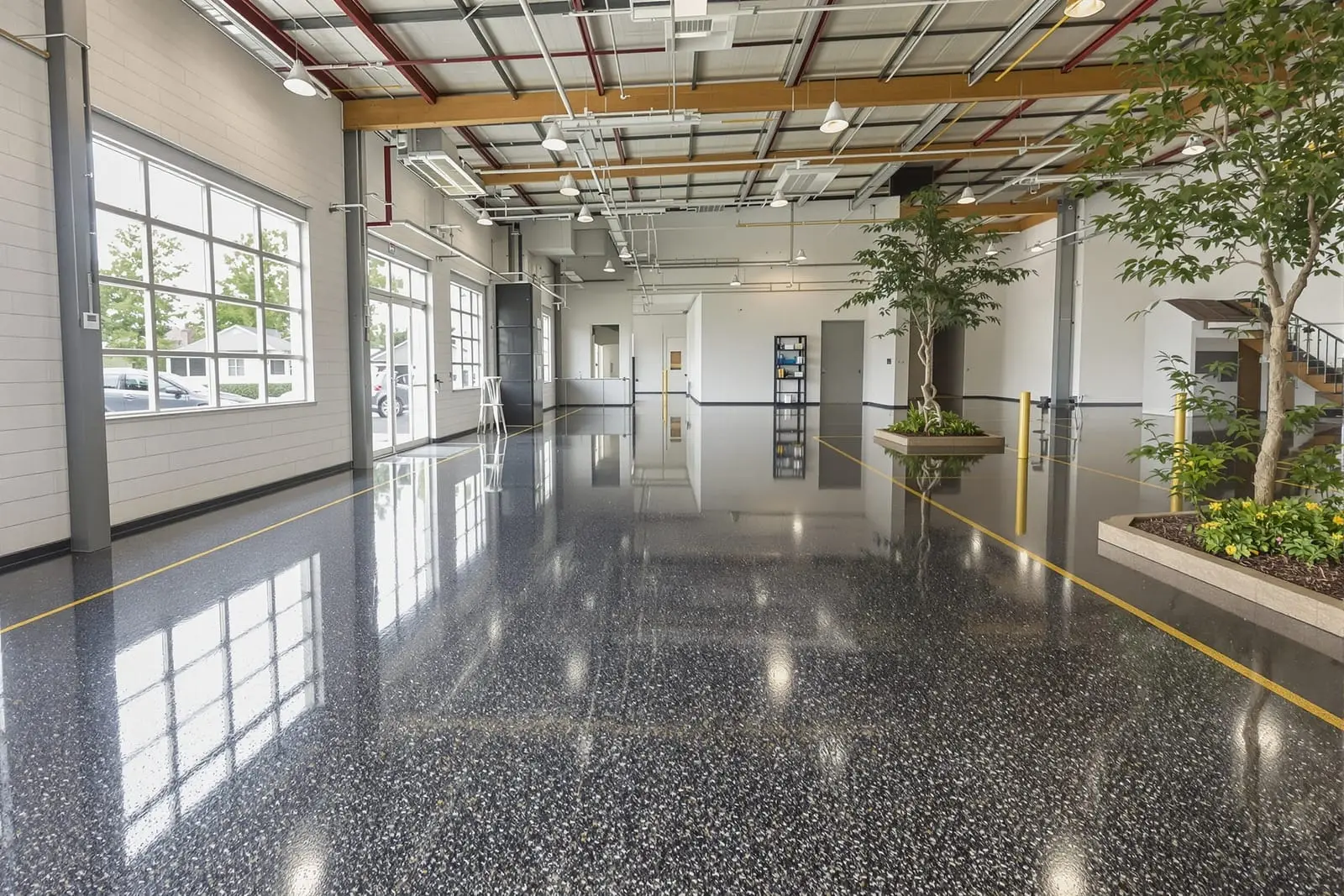
Support heavy operations with purpose built industrial concrete floors in Kingwood, TX. We design and pour warehouse slabs that control cracking and curling while handling forklift traffic and racking loads. From vapor barriers to joint layout, every detail is managed for long term performance and smooth movement.
Primetime Concrete Kingwood provides professional industrial concrete floors throughout Kingwood, TX and the surrounding area. Our licensed, insured crew delivers safe, clean, on-time work with a free estimate before anything begins. Call (346) 615-6965 or request your free quote.
Industrial concrete floors built for Kingwood warehouses
Primetime Concrete Kingwood installs and repairs industrial concrete floors that stand up to forklifts, pallet jacks, racking loads, and constant traffic common in Kingwood and North Houston warehouses. Instead of treating your project like a basic slab, we design the floor around your load demands, rack layout, and future expansion plans.
For warehouse and industrial spaces, the main priorities are load capacity, flatness for safe forklift operation, abrasion resistance, and long-term low maintenance. We look at your operations first: narrow aisle or standard forklifts, racking height, point loads from rack posts, moisture conditions in the building, and any chemical exposure from production or storage. That information drives everything from slab thickness and joint layout to mix design and finishing method.
In Kingwood, soil conditions can vary within a single property because of previous development or fill dirt. Before we pour, we evaluate the subgrade and existing base, then recommend any remediation so your industrial concrete floors do not settle and crack unevenly. The goal is a floor you do not have to think about while you run your operation.
How we design warehouse and industrial slabs
A good industrial floor is engineered, not guessed. Primetime Concrete Kingwood works from actual loading data when possible. We look at rack manufacturer specs, equipment wheel loads, and any heavy machinery you plan to install. With that, we determine slab thickness, reinforcement choice, and joint spacing that match how your building will be used, not just a standard formula.
Most warehouse slabs in this area range from 5 to 8 inches thick, but thickness alone is not enough. We decide between reinforcement options like rebar mats, post tension cables, or welded wire mesh depending on cracking tolerance and budget. For high-bay or narrow-aisle operations, we often tighten joint spacing and use dowel baskets at construction joints to reduce slab movement that operators feel as bumps.
We also factor in vapor concerns. Many Kingwood warehouses are built on sites with high groundwater, so we commonly specify a vapor barrier under the slab and a mix that limits moisture transmission. This helps protect adhesives if you add coatings or tile later and reduces issues like curling and surface dusting. The end result is a floor that performs predictably instead of surprising you a year after move-in.
Step-by-step installation process for industrial concrete floors
For new warehouse construction or major interior slab replacement, our process follows a clear sequence so you know what is happening each day.
First, we prepare the subgrade. That can include cutting and removing old concrete, hauling out unsuitable soils, compacting subgrade to proper density, and installing a crushed stone base. In Kingwood, we pay close attention to soft or saturated spots from poor drainage and install additional base or geotextile where needed.
Next, we set forms and layout joint lines and slab breaks to match column grids, dock positions, and door locations. If reinforcement is used, we either place rebar or wire mesh on chairs or install post tension cables according to the engineer’s plan. For forklifts and racks, it is critical that this steel is in the correct position within the slab, not lying on the subgrade where it does almost nothing.
We then pour the concrete, typically using a higher strength mix with low water-to-cement ratio, industrial aggregates, and admixtures for workability and shrinkage control. While the slab is still plastic, we use screeds and laser-guided equipment to achieve target flatness, then power trowels to bring the floor to the desired finish.
Finally, we cut control joints at precise intervals and depths to manage where shrinkage cracking occurs. We return to clean and fill key joints with semi-rigid epoxy or polyurea so forklift wheels cross smoothly. When required, we apply curing compounds or sealers that protect against dusting and chemical absorption.
Finish options for warehouse and industrial environments
Not every industrial concrete floor needs the same finish. Primetime Concrete Kingwood recommends finishes based on your operations, budget, and maintenance preferences.
For high traffic warehousing and distribution, a hard-troweled slab with a densifier and sealer is a common choice. The densifier penetrates the concrete, hardens the surface, and reduces dusting. This is a good fit if you want a durable floor without the cost of a full coating system.
For facilities that deal with oils, mild chemicals, or constant spills, we often suggest an epoxy or urethane coating system. These can be smooth for easy cleaning or textured for more slip resistance in wet areas. We prepare the existing slab by grinding or shot blasting to ensure proper bond, then apply the coating according to manufacturer specs so it does not peel under forklift traffic.
In some Kingwood warehouses where appearance matters, such as showrooms combined with storage, polished concrete can be a smart choice. This process uses progressively finer grinding stages to create a smooth, reflective surface. We can adjust the gloss level, add color dye, and expose more or less aggregate. Polished industrial concrete floors are durable, easier to clean, and do not require wax, but they do call for periodic maintenance polishing to stay at their best.
We also address slip resistance. If your operations involve frequent moisture, we can modify the finish or add traction additives so workers and equipment have better footing without turning daily cleaning into a struggle.
Common problems with industrial floors and how we prevent them
Warehouse operators in Kingwood often call us about floor problems that were baked in at installation time. Typical issues include random cracking, joint spalling where forklifts hit the edges, surface dusting that coats equipment, and low spots that collect water or cause pallet jacks to drag.
Primetime Concrete Kingwood tackles these problems at the design and installation stage. To limit uncontrolled cracking, we use appropriate joint spacing, reinforcement selection, and mix designs that reduce shrinkage. When cracks are unavoidable, we plan them with sawed control joints so they follow a straight line that can be sealed.
To keep joints from breaking down, especially at dock areas and main traffic lanes, we use proper load-transfer dowels and semi-rigid joint fillers that support wheel loads instead of collapsing. This is particularly important in Kingwood distribution centers that run 24/7 forklift operations where even small bumps can lead to equipment wear and pallet instability.
Surface dusting is usually the result of a poor mix, adding too much water on site, or finishing too early. We avoid this by controlling water content, working closely with local ready-mix suppliers, and monitoring finishing timing based on temperature and humidity. If you already have a dusty floor, we can often correct it with grinding, densification, and sealing.
For existing flawed slabs, we offer repair solutions such as joint rebuilds, partial depth patching, slab leveling or topping slabs over badly damaged floors. When budget or downtime is a concern, we explain the tradeoffs between short-term patch work and more complete structural fixes so you can make a clear decision.
Planning, pricing, and what Kingwood owners should decide upfront
Before you ask for pricing on industrial concrete floors, it helps to have a few decisions made. The main cost drivers are slab thickness, reinforcement type, finish system, and how much subgrade work is needed. Site access, working around an active operation, and tight schedules also affect labor and equipment costs.
When Primetime Concrete Kingwood meets with you, we ask about your current and future use. Are you planning mezzanines, additional racking, or heavier equipment later. It is usually cheaper to build in more capacity now than to tear out and replace sections later. We also discuss downtime. For active warehouses, we can often phase the work so parts of the building remain in use while we replace or upgrade other segments.
Permitting and inspections in the Kingwood and greater Houston area are straightforward if the structural design is in order. We coordinate with your engineer or bring in one of our local partners to produce stamped drawings where required. We also help plan around weather. Houston humidity and sudden rain can affect finishing schedules, so we typically build in weather flexibility to avoid rushing pours.
When you are ready to move forward, we provide a written proposal that details slab thickness, reinforcement, joint details, finish type, curing method, and any coating or polishing system. That level of detail protects you from vague quotes that leave out key steps. Our goal is to put an industrial floor under your operation that you can forget about for years while it quietly does its job.
“
Professional warehouse & industrial concrete floors, done right the first time, quality materials, honest pricing, and results that last.
Primetime Concrete Kingwood
Warehouse & Industrial Concrete Floors Across Our Service Area