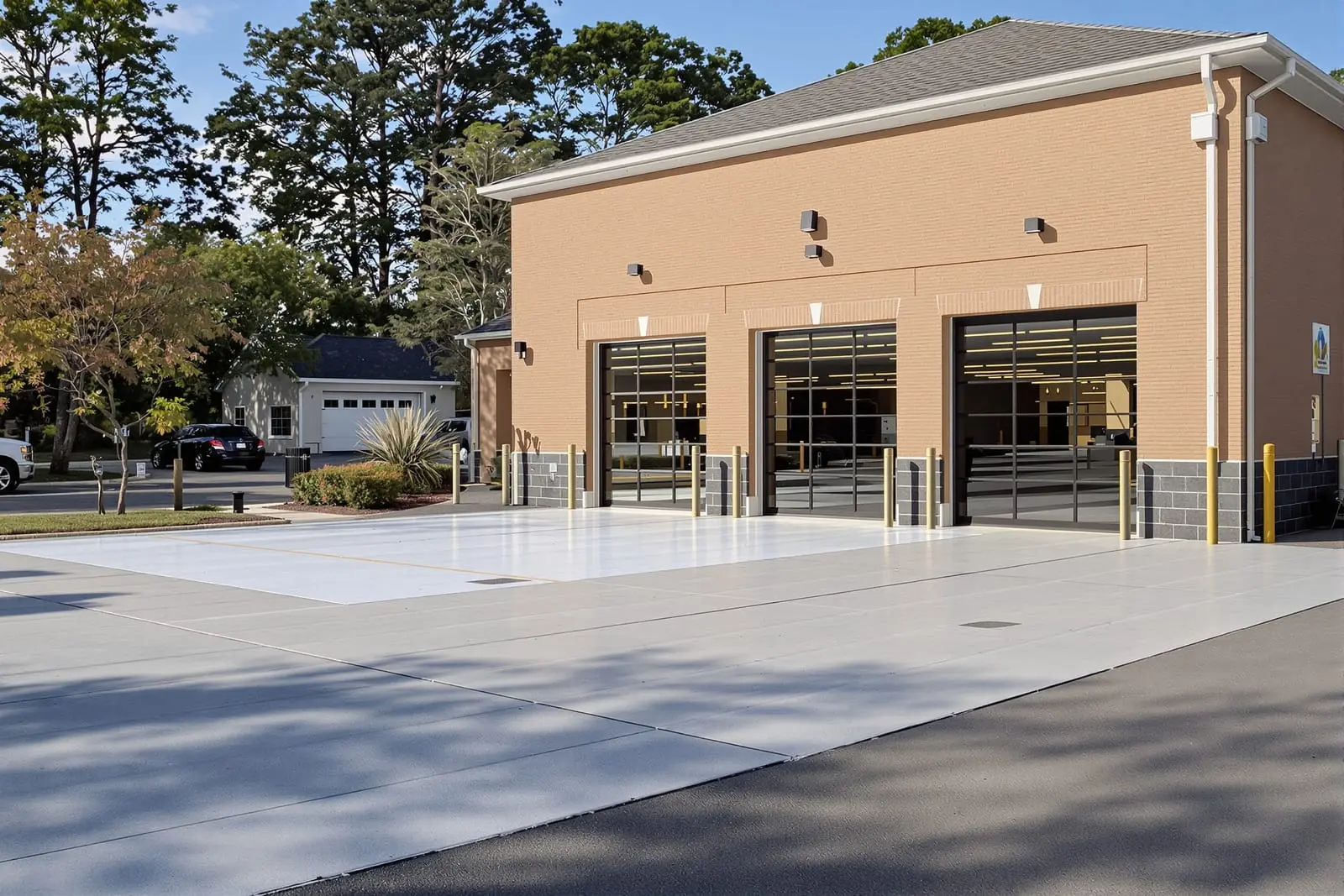
Keep shipping running smoothly with properly engineered loading dock concrete slabs in Kingwood, TX. We pour thick, reinforced slabs and dock aprons that handle repeated truck loading and turning. Our designs account for drainage, joint layout, and dock equipment so your operations stay efficient and safe.
Primetime Concrete Kingwood provides professional commercial concrete slab throughout Kingwood, TX and the surrounding area. Our licensed, insured crew delivers safe, clean, on-time work with a free estimate before anything begins. Call (346) 615-6965 or request your free quote.
Commercial Concrete Slabs Built for Kingwood Businesses
A reliable commercial concrete slab is the foundation of your operation. If it cracks, settles, or drains poorly, everything on top of it is at risk. At Primetime Concrete Kingwood, we design and pour commercial slabs and loading docks that are tailored to real conditions in Kingwood, TX, from our clay soils and heavy rain to the truck traffic your site sees every day.
We regularly work on projects for warehouses, light industrial buildings, retail centers, churches, and service yards throughout Kingwood and the North Houston area. That local experience matters. Soil conditions off Northpark Drive are not the same as near Lake Houston, and older sites built in the 80s along Kingwood Drive often need different prep than brand new pads in growing commercial parks. We factor all of this into the thickness, reinforcement, and drainage layout of your slab or loading dock so you get long term performance, not short term patchwork.
From the first site walk to the final concrete finish, you work directly with a team that understands commercial schedules, code requirements, and safety around active businesses. We coordinate our work to keep your doors open whenever possible, and we explain each step in plain language so you always know what is happening on your property.
Planning Your Loading Dock or Commercial Slab
Successful loading docks and commercial slabs start with careful planning, not just ordering concrete and pouring. When Primetime Concrete Kingwood visits your site, we look at four key factors right away: soil conditions, drainage paths, expected loads, and access for trucks or forklifts.
Soil conditions in Kingwood can vary between tighter clays and fill dirt that was brought in during earlier development. We may recommend soil testing for heavier duty slabs, then plan for over excavation or select fill to reduce future settlement. For loading docks, we pay close attention to where trucks will turn and where their rear wheels will sit while loading, since those wheel paths take a lot of abuse over time.
Drainage planning is especially important in our area because of intense thunderstorms and hurricane season. We design slab grades and dock aprons so rainwater runs away from your building and loading doors, not toward them. This can involve subtle slope adjustments, surface drains, or tying into existing site drainage. For commercial tenants in shared centers, we also look at how our work interacts with neighboring units and common drive lanes so you avoid surprise water issues later.
Before we quote your project, we review your intended use: pallet racking or open warehouse, light delivery vans or 18 wheelers, small retail backroom or full cross dock operation. This information drives design thickness, reinforcement type, and any special details like keyways or haunches at dock edges.
How We Build Durable Loading Docks
A loading dock in Kingwood has to handle trucks, forklifts, pallet jacks, and foot traffic in high heat and occasional flooding conditions. Primetime Concrete Kingwood builds docks in a series of deliberate steps that focus on long term durability.
First, we prepare the subgrade. That means stripping any weak topsoil or old base, compacting the existing soil with plate compactors or rollers, then installing a stable base material such as crushed concrete or limestone. We compact in layers and test the firmness underfoot and with equipment because a dock is only as strong as what is underneath it.
Next, we install formwork that shapes the dock face, apron, and any ramps or truck wells. At this stage we set final elevations so your dock height lines up correctly with typical trailer deck heights. We also confirm clearances at dock doors and nearby structures. For many Kingwood commercial properties, this means coordinating with existing metal buildings or retrofitting around prior construction.
Reinforcement is then placed, typically a combination of rebar and welded wire mesh. High stress areas like dock faces, dock bumpers, and turning areas receive extra reinforcing to resist chipping and cracking. Where trucks constantly drop heavy loads, we may thicken the slab or add doweled construction joints.
We pour using a concrete mix designed for commercial duty, often 4,000 psi or higher, with air entrainment and a low water to cement ratio for strength. While the concrete is still workable, we install control joints, edge finishes, and non slip textures so the surface is safe in wet conditions. Proper curing is critical, so we keep the concrete moist or use curing compounds so it reaches its intended strength instead of drying out too fast in the Texas sun.
Commercial Concrete Slab Construction, Step by Step
For commercial concrete slabs that support buildings, showrooms, or equipment, Primetime Concrete Kingwood follows a structured process to give your structure a stable base.
Layout and elevation: We start by transferring your building plans to the field, setting string lines, and checking elevations against floodplain data and existing grades. In Kingwood, we are careful to coordinate with drainage requirements and any HOA or commercial development standards.
Subgrade prep and moisture barrier: After grading and compacting, we often place a vapor barrier, usually a polyethylene sheet, under interior slabs to control moisture migration. This is especially important for spaces that will receive floor coverings, office build outs, or sensitive equipment.
Rebar and structural details: We install rebar according to engineered plans, paying attention to column pads, thickened edges, and any load bearing walls. For tilt wall buildings or steel frames, we coordinate anchor bolt locations and sleeves for plumbing and electrical before the pour to avoid cutting into a finished slab later.
Concrete placement and finishing: During the pour, we place concrete in sections, vibrate it to remove air pockets, then screed it to the proper level. Finish type depends on your use. Warehouses typically get a hard troweled finish for smooth forklift travel. Outdoor service areas might receive a broom finish for traction. Where flatness is critical, such as racking aisles, we follow tighter flatness and levelness tolerances than a typical residential slab.
Curing and joint control: After finishing, we cure the slab and saw cut control joints in a pattern that manages natural shrinkage. Proper joint layout reduces random cracking and gives the slab a controlled place to relieve stress. For commercial users, we explain which joints can be filled later for smoother forklift operation.
Cost Drivers and Common Issues in Kingwood
Understanding what drives cost helps you compare bids accurately. At Primetime Concrete Kingwood, we walk you through each part of your loading dock or commercial concrete slab price so you know why a design choice matters.
Major cost factors include slab thickness, reinforcement type, subgrade preparation, and access for trucks and concrete pumps. A slab for light storage with limited vehicle traffic might be 4 inches thick with fiber reinforcement, while a heavy duty dock apron for 18 wheelers may be 8 inches or more with significant rebar. Better subgrade prep and thicker slabs increase upfront cost but often save money over time by reducing repairs.
Demolition of existing concrete, working around utilities, and tight site access can also increase labor and equipment time. Many Kingwood businesses occupy older structures that have thin or poorly reinforced slabs. If we find voids, soft subgrade, or previous patchwork, we will explain options, which might include partial demo and rebuild or full replacement.
Common issues we see in local commercial slabs include slab edges breaking where trucks turn too close, ponding water near dock doors, hairline cracking from insufficient control joints, and interior slab moisture affecting floor coverings. We address these issues with better joint layout, thicker edge details, improved drainage design, and appropriate moisture control under interior slabs.
Instead of burying potential extras, we point out possible unknowns at the proposal stage, such as what could happen if we discover unsuitable soil during excavation. This helps you budget with fewer surprises and choose a design that balances cost with long term performance.
Why Local Experience Matters for Your Project
Kingwood’s combination of older commercial centers, newer light industrial parks, and frequent heavy rain makes commercial slab and loading dock work different from a generic concrete job. Primetime Concrete Kingwood focuses on this niche, so we bring real, local lessons learned to each project.
We know how certain back alleys load up with water during storms and design dock slabs to keep that water out of your building. We have seen how older parking lots around aging strip centers move and crack, so we adjust our base and joint details accordingly. For new construction, we are familiar with local engineering standards and the expectations of city inspectors and commercial property managers in the Houston metro.
Equally important, we respect your schedule. Whether you are adding a new loading dock behind a live retail store on Kingwood Drive or replacing a warehouse slab while trying to keep inventory moving, we phase work to minimize downtime. That may mean night or weekend pours, temporary ramping, or staged demolition and replacement.
When you contact Primetime Concrete Kingwood about a loading dock or commercial concrete slab, we start by listening to how your business operates. Then we recommend a design and construction plan that supports your day to day reality: the type of trucks that show up, how your team moves materials, and how much room you really have to work with behind your building.
“
Professional loading docks & commercial slabs, done right the first time, quality materials, honest pricing, and results that last.
Primetime Concrete Kingwood
Loading Docks & Commercial Slabs Across Our Service Area