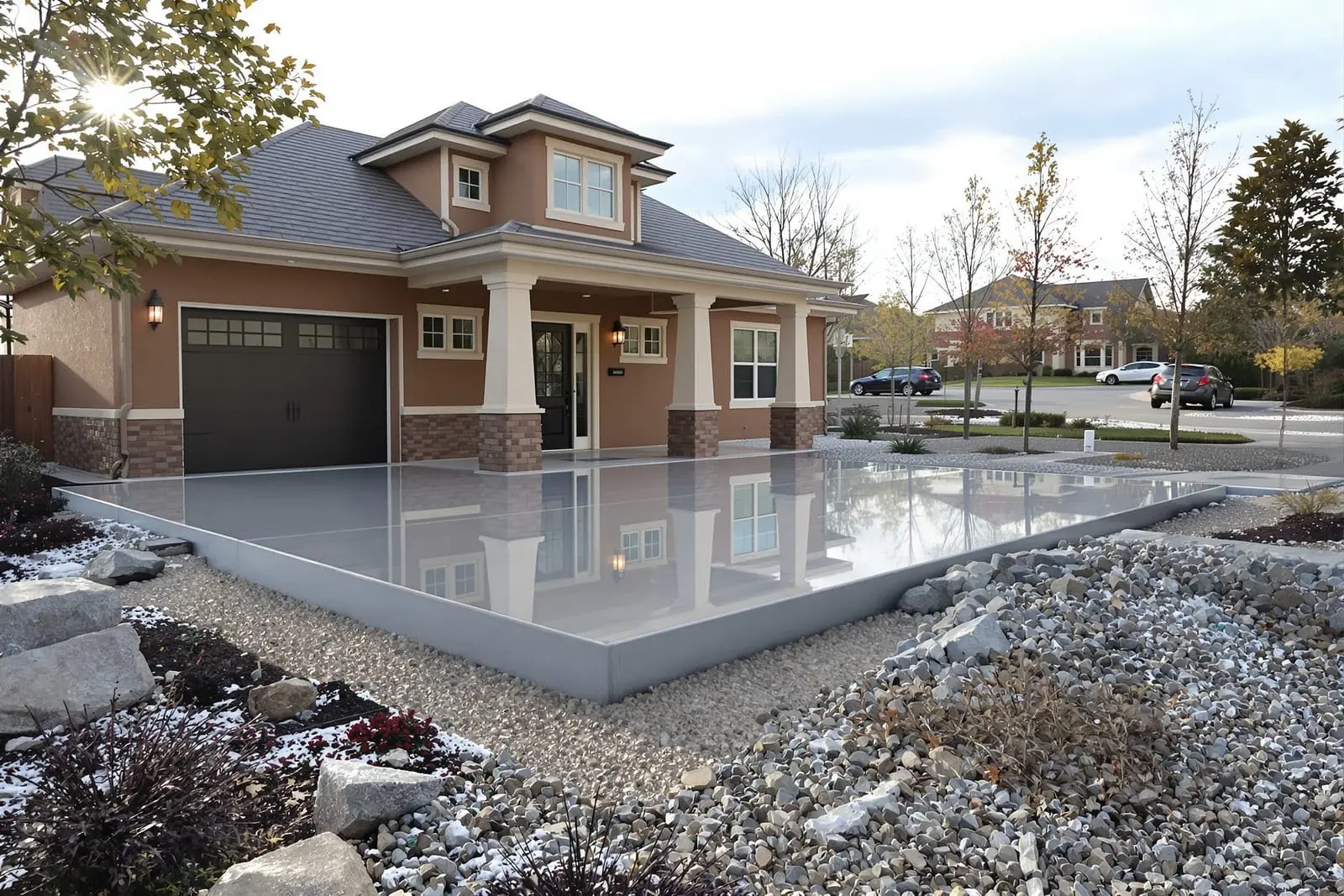
Finish your site with reliable commercial concrete flatwork in Kingwood, TX. We place and finish slabs, sidewalks, dumpster pads, and equipment pads to spec. Our team is equipped for large pours and tight timelines, delivering flat, properly jointed concrete surfaces that withstand constant use.
Primetime Concrete Kingwood provides professional commercial concrete flatwork throughout Kingwood, TX and the surrounding area. Our licensed, insured crew delivers safe, clean, on-time work with a free estimate before anything begins. Call (346) 615-6965 or request your free quote.
Commercial Slabs & Flatwork for Kingwood Businesses
Commercial concrete flatwork is the foundation of most commercial projects in Kingwood, from retail pads and restaurant patios to warehouse floors and truck courts. Primetime Concrete Kingwood focuses on getting these slabs right the first time, because fixing a failed slab under an active business is costly and disruptive.
When we meet with you, we start by walking the site and talking through how the slab will actually be used. A light‑duty parking lot, a drive‑thru lane with constant traffic, and a warehouse with forklifts and pallet racks all need different slab thicknesses, reinforcement, and finishes. We look at truck access, drainage paths, existing buildings, and nearby trees, since our local clay soils move a lot when moisture changes.
In Kingwood, the timing of a commercial slab pour matters. The heat and humidity can cause rapid surface drying in summer, but slow curing and longer set times in cooler, wet months. We schedule pours as early in the day as possible, plan finishing crews around expected temperatures, and choose mix designs that fit the season so you do not end up with random cracking or a weak surface. Our goal is a slab that holds up to use, not just one that looks good on pour day.
How We Build Durable Commercial Slabs & Flatwork
A sound commercial slab starts with proper subgrade work. We strip organics, soft spots, and loose fill, then re‑compact the subgrade to the density specified by the engineer. Where the native soil in Kingwood is too expansive or soft, we add a layer of select fill or crushed concrete and compact in lifts. For parking lots and drive lanes, we pay special attention to entry drives and dumpster pads because these are the first areas to fail if not built correctly.
Once the base is set, we install moisture barriers or vapor retarders where required, such as under interior slabs or cold storage. Then we set forms with accurate elevations and slopes for drainage, typically targeting at least 1 percent fall away from buildings. For commercial concrete flatwork tied into existing slabs, we drill and epoxy dowels so the new and old concrete move together instead of separating and creating trip hazards.
Reinforcement comes next. Depending on use and engineering, this can be rebar on chairs, welded wire mesh, or in some cases fiber‑reinforced concrete. For example, a warehouse floor might receive a combination of rebar at column lines and synthetic fibers in the mix to control shrinkage cracking between joints. We pay close attention to bar placement because steel that ends up on the bottom of the slab does very little for structural performance.
Finally, we place and finish the concrete. For large pours like parking lots or distribution centers, we often use laser screeds to achieve flatness and speed, then follow with ride‑on trowels if a hard, smooth floor is required. For exterior slabs, finishing is timed so we get a slip resistant broom texture without tearing the surface. Throughout this process, we monitor slump, air content, and finishing times so the slab meets spec and cures evenly.
Concrete Mixes, Finishes, and Expansion Joint Planning
Not all commercial concrete is the same, and using a one‑size‑fits‑all mix is a quick way to shorten the life of a slab. Primetime Concrete Kingwood works with local ready‑mix suppliers to choose mixes that fit the project. A typical exterior commercial slab in Kingwood might use a 4,000 psi mix with 5 to 6 sack cement content, adjusted for water reduction in hot weather. Interior slabs subject to heavy racks or machinery may require higher strengths, lower water‑cement ratios, or special admixtures to reduce shrinkage.
Finishes are matched to use. Warehouse floors often get a hard trowel finish for easier cleaning and forklift traffic, while sidewalks, loading zones, and outdoor seating areas get broom finishes that provide grip when wet. We can also add integral color or post‑apply sealers for commercial patios and entry plazas, but we always plan these around long‑term maintenance, not just opening‑day photos.
Joint planning is one of the most overlooked parts of commercial concrete flatwork. Without properly placed control joints, even a well‑designed slab will crack randomly. We lay out sawcut or tooled joints at calculated spacings based on slab thickness and panel shape, usually trying to keep panel lengths no more than two to three times the slab thickness in feet. For example, a 6 inch slab would typically have joints no more than 12 to 18 feet apart in each direction.
We also design and install expansion and isolation joints around columns, building foundations, and utility penetrations. In Kingwood's climate, temperature swings and moisture cycles cause enough movement that these details matter. For commercial driveways tied to city streets, we coordinate dowels and expansion material to meet municipal requirements while still giving the slab room to move without breaking.
Cost Factors, Scheduling, and Local Conditions in Kingwood
The cost of commercial concrete flatwork in Kingwood is driven by more than just square footage. Thickness, reinforcement type, subgrade prep, site access, and finish requirements all play a part. For example, a simple 4 inch sidewalk with wire mesh is far less involved than a 7 inch dumpster pad with rebar, thicker base material, and doweled joints into an existing slab. Tight sites that require pumping concrete instead of direct chute placement also add to cost.
Before pricing, Primetime Concrete Kingwood asks specific questions about your operations: expected vehicle loads, rack layouts, floor flatness needs, and any future expansion plans. That information lets us price the slab you actually need, rather than a generic square foot rate that usually leads to cut corners or surprise change orders later.
Local weather and soil also affect both cost and schedule. In summer, we may recommend evening or very early morning pours, use set‑retarding admixtures, and add additional curing measures like evaporation reducers and wet curing blankets. In wetter months, we plan for standby time to allow subgrades to dry out so we are not pouring over mud that will settle later. If your project is time sensitive, we can phase pours so your crews can start framing or racking on one area while we are still working on others.
Permits and inspections are another part of the picture. For many commercial jobs, especially those that tie to public streets or involve fire lanes, we coordinate with engineers and local inspectors to ensure the slab meets city or county requirements. Getting these details right up front helps avoid failed inspections that can stall your project.
What to Look For When Hiring a Commercial Concrete Contractor
Choosing a contractor for commercial slabs and flatwork is not the same as hiring someone for a small residential patio. You should expect clear engineering coordination, accurate layout, and crews who understand commercial schedules. Primetime Concrete Kingwood often works directly from structural drawings, so we are used to reading plans, catching conflicts in details, and asking for clarifications before anything gets poured.
Ask any contractor how they handle subgrade testing and proof rolling. On many commercial jobs, we schedule a proof roll with a loaded truck or roller to expose soft spots. These are then undercut and replaced with compacted fill. Skipping this step is one of the most common reasons commercial slabs settle and crack prematurely in the Kingwood area.
You should also ask about curing methods. A slab that is not cured properly in the first week loses long‑term strength and surface hardness. On commercial projects, we commonly use curing compounds compliant with the specifications, or wet curing for higher performance floor slabs. We protect new concrete from early traffic and schedule sawcutting at the right time so joints are effective without raveling the edges.
Finally, look for a contractor who will be honest about limitations. For example, in tight infill sites in Kingwood with existing buildings and utilities, we will explain where we can and cannot get heavy equipment, what that means for your schedule, and how we will phase the work to keep your business accessible. A good commercial slab is the result of clear planning and execution, not just a day of pouring concrete.
“
Professional commercial slabs & flatwork, done right the first time, quality materials, honest pricing, and results that last.
Primetime Concrete Kingwood
Commercial Slabs & Flatwork Across Our Service Area