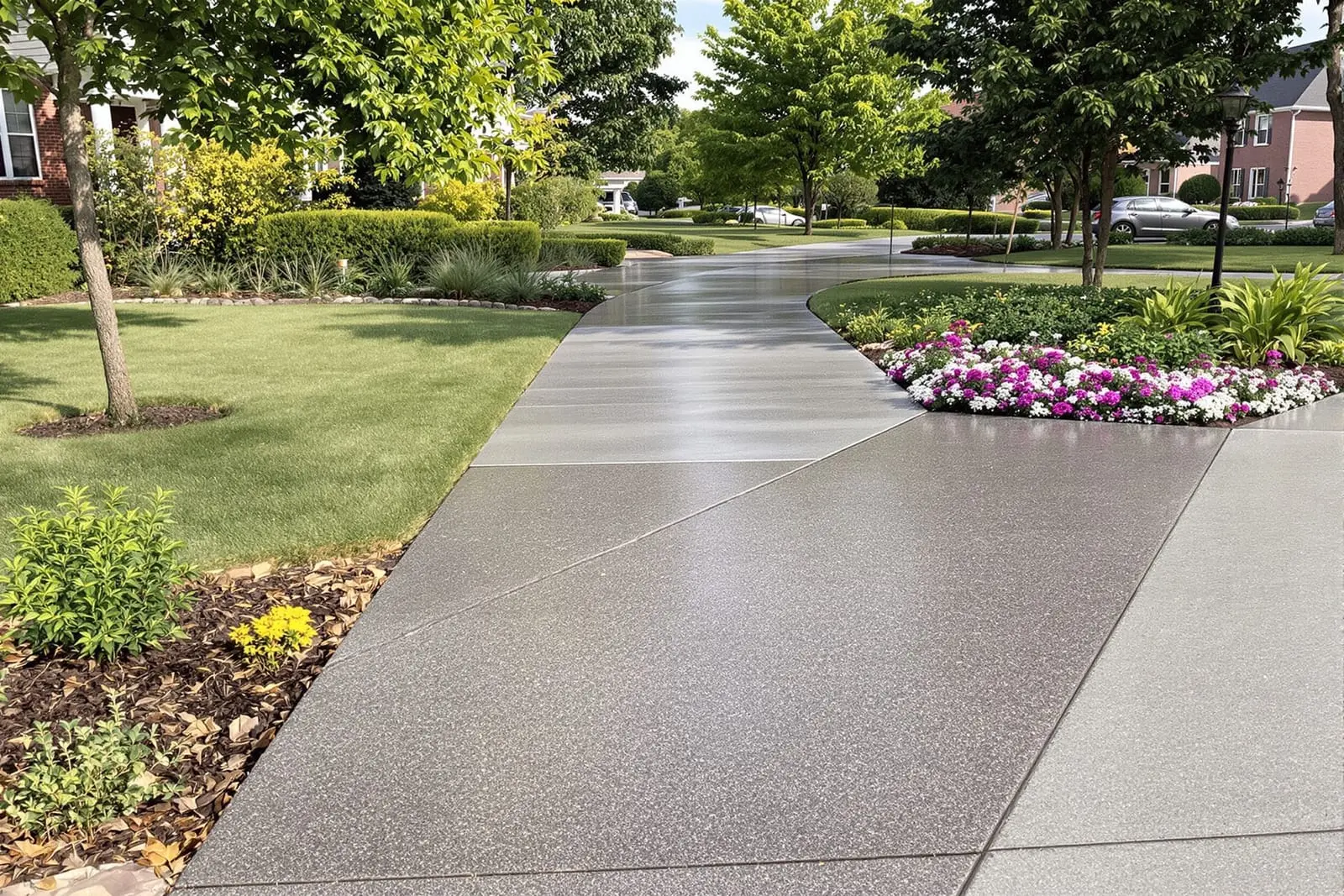
Improve safety and curb appeal with professional concrete walkway installation in Kingwood, TX. We pour smooth, even sidewalks and paths that drain correctly and meet local standards. Whether you need a front entry walk, garden path, or neighborhood sidewalk, our team builds long lasting concrete routes that are easy to maintain.
Primetime Concrete Kingwood provides professional concrete walkway installation throughout Kingwood, TX and the surrounding area. Our licensed, insured crew delivers safe, clean, on-time work with a free estimate before anything begins. Call (346) 615-6965 or request your free quote.
Concrete Walkways & Sidewalks for Kingwood Homes and Businesses
Concrete walkways and sidewalks seem simple, but in Kingwood they take a beating from heat, sudden storms, and shifting clay soil. Primetime Concrete Kingwood focuses on building paths that stay level and safe for many years, not just something that looks good for the first season. We install new concrete walkways, replace broken or lifted sections, and add connecting paths from driveways to front doors, patios, pools, side yards, and mailboxes.
On a typical project we start by walking the property with you. We look at where water currently runs, where tree roots are close to the surface, how steep the yard is, and how people actually move around the space. From there we suggest walkway layouts that solve real problems, such as muddy shortcuts, tripping hazards, or narrow paths that are hard to use with strollers or carts. You get a clear plan, straightforward pricing, and a timeline that makes sense for local weather.
We work throughout Kingwood and the surrounding area, so we are used to neighborhood HOA expectations and typical lot layouts. Whether you are in an older section with established trees or a newer development with tighter lot lines, we tailor the design so the walkway fits the property and does not create drainage or root problems later.
How Our Concrete Walkway Installation Process Works
For new concrete walkway installation, preparation is where most of the quality comes from. We start by marking utilities, then remove grass, roots, and soft soil to a depth that will allow for a compacted base and the concrete slab. On Kingwood’s expansive clay soils, we prefer to remove more of the unstable top layer and replace it with a compacted base material, usually crushed concrete or limestone, to limit future movement.
Once the subgrade is cut, we compact it with plate tampers or a roller so the soil is tight and uniform. Then we add and level the base material, compacting in thin lifts. This step takes extra time but pays off in walkways that stay flat instead of sinking or heaving. We set wooden or metal forms to define the exact shape, width, curves, and elevations of the path. A standard residential walkway is 3 to 4 feet wide, but for busy side yards, pool access, or commercial sidewalks we often recommend 4 to 5 feet so two people can pass comfortably.
Before pouring, we place control joints in the layout to control where the concrete will crack as it naturally shrinks and responds to temperature changes. For most walkways we cut or tool joints every 4 to 6 feet, adjusting for thickness and overall design. Where there is more load or known soil movement, we may add reinforcing steel or wire mesh to hold the slab together if cracking occurs.
We typically use a 4 inch thick pour for standard walkways and 5 inch or more where carts, light vehicles, or heavy equipment will cross. Our mixes are chosen for the Kingwood climate, usually a 3000 to 4000 psi concrete with additives appropriate to the time of year. After the pour, we finish the surface, edge the sides so they do not chip easily, and then apply curing methods that keep moisture in the slab while it gains strength. Finally, we return to saw cut joints if needed, clean up the site, and walk the project with you for final approval.
Design Options To Fit Your Property and Use
Primetime Concrete Kingwood offers more than plain gray strips of concrete. For homeowners who want something that blends with landscaping or brick, we install colored concrete, exposed aggregate, and stamped textures that look like stone or pavers but with the durability of a single slab. We discuss how much texture you really need, balancing appearance with safety so the surface is comfortable to walk on and not slick when wet.
Surface finish matters in our humid, rainy area. A standard broom finish gives a light texture that helps with traction for everyday walkways and is ideal for shaded Kingwood lots where surfaces can stay damp longer. Around pools and in steeper areas we may increase broom texture or use specialty finishes that improve grip without feeling rough on bare feet.
Layout is another place where thoughtful design helps. Instead of straight lines that cut across your yard at odd angles, we can create gentle curves around trees, flower beds, and existing patios. We plan slopes so water moves off the walkway into grass or beds, not toward your foundation or your neighbor’s property. For older residents or anyone with mobility concerns, we can adjust slopes to keep them within accessible guidelines and add wider turning areas at corners.
Lighting and edging are also considered during design. While we do not run electrical work ourselves, we coordinate with electricians or landscapers so low voltage lights can be added along the path later if you choose. For edges, you can leave concrete exposed for a clean modern look or border the walkway with rock or steel edging to separate it from turf and keep grass from creeping over the slab.
What Affects Cost and Timeline in Kingwood
Concrete walkway installation costs depend on a few very specific factors: square footage, thickness, base preparation, finish style, and how difficult it is to access the area. A straight, 4 foot wide walkway across a front yard with good access for our crew and wheelbarrows or a small buggy will be on the lower end of the range. Curves, steps, decorative finishes, and heavy base work to deal with soft or saturated soil will increase cost but also extend the life of the walkway.
Tree roots are a common cost driver in Kingwood. If your walkway crosses near large oaks or pines, we may need to reroute the path, carefully cut specific roots, or install root barriers so the slab does not buckle in a few years. This extra planning and labor adds to the quote but is often cheaper than tearing out and redoing a lifted walkway later.
Weather affects timeline more than most people realize. In our area, spring and fall are usually the most comfortable times for installation, with fewer extreme heat days. We pour year round, but in peak summer we often start earlier in the morning and use set control admixtures so the surface does not dry too quickly, which can cause surface checking and reduced strength. During stretches of heavy rain, we may reschedule a pour to avoid water pooling on fresh concrete or washing out the base.
On a typical residential project, you can expect 1 day for demolition and prep, 1 day for concrete placement and finishing, and a few days of curing time before normal foot traffic. We usually recommend keeping heavy items like dumpsters or skid steers off the walkway for at least a week. You will receive specific instructions for when you can walk on the surface, roll trash cans over it, or place furniture, based on the season and mix used.
Common Issues, Repairs, and How We Build to Avoid Them
Most walkway problems in Kingwood fall into a few categories: trip hazards from lifted slabs, cracks that open up wider than expected, standing water, and slick surfaces in shaded or pool areas. When we look at an existing sidewalk, we identify which of these is happening and why before recommending full replacement or targeted repairs.
Minor surface cracks that do not change height from one side to the other can often be monitored or sealed. However, if one section is higher than the next, you have a tripping hazard that can create liability issues. Depending on the cause, we might mudjack or foam level small areas, or we may recommend removing and repouring sections if the base is failing or tree roots are responsible.
Drainage problems are common because many walkways were poured flat, without enough slope to shed water. Primetime Concrete Kingwood designs new work with intentional pitch, usually at least 1/8 inch drop per foot, so water does not sit on the surface. In tight spots near foundations or where water already collects, we may suggest adding a drain line or adjusting nearby grading. This is especially important in our heavy rainfall events, where even a slight dip in a sidewalk can hold water for days.
For safety, texture and sealer choice matter. We avoid overly smooth finishes except in rare interior or covered situations. Where sealers are used, such as on decorative walkways, we choose products that do not leave a glassy, slippery surface. If an existing walkway is dangerously slick, we can often correct it with surface treatments or overlays that add grip without a full replacement.
Before you hire any contractor, ask how they handle base preparation, joint spacing, and drainage, and have them explain it in plain terms. A low price that skips those steps usually leads to problems in our local soil and weather conditions. When you work with Primetime Concrete Kingwood, we walk you through these details so you know exactly what you are paying for and how it will hold up over time.
“
Professional concrete walkways & sidewalks, done right the first time, quality materials, honest pricing, and results that last.
Primetime Concrete Kingwood
Concrete Walkways & Sidewalks Across Our Service Area